My old pal Germanicus, starkers

Reflections on a Roman sculpture.

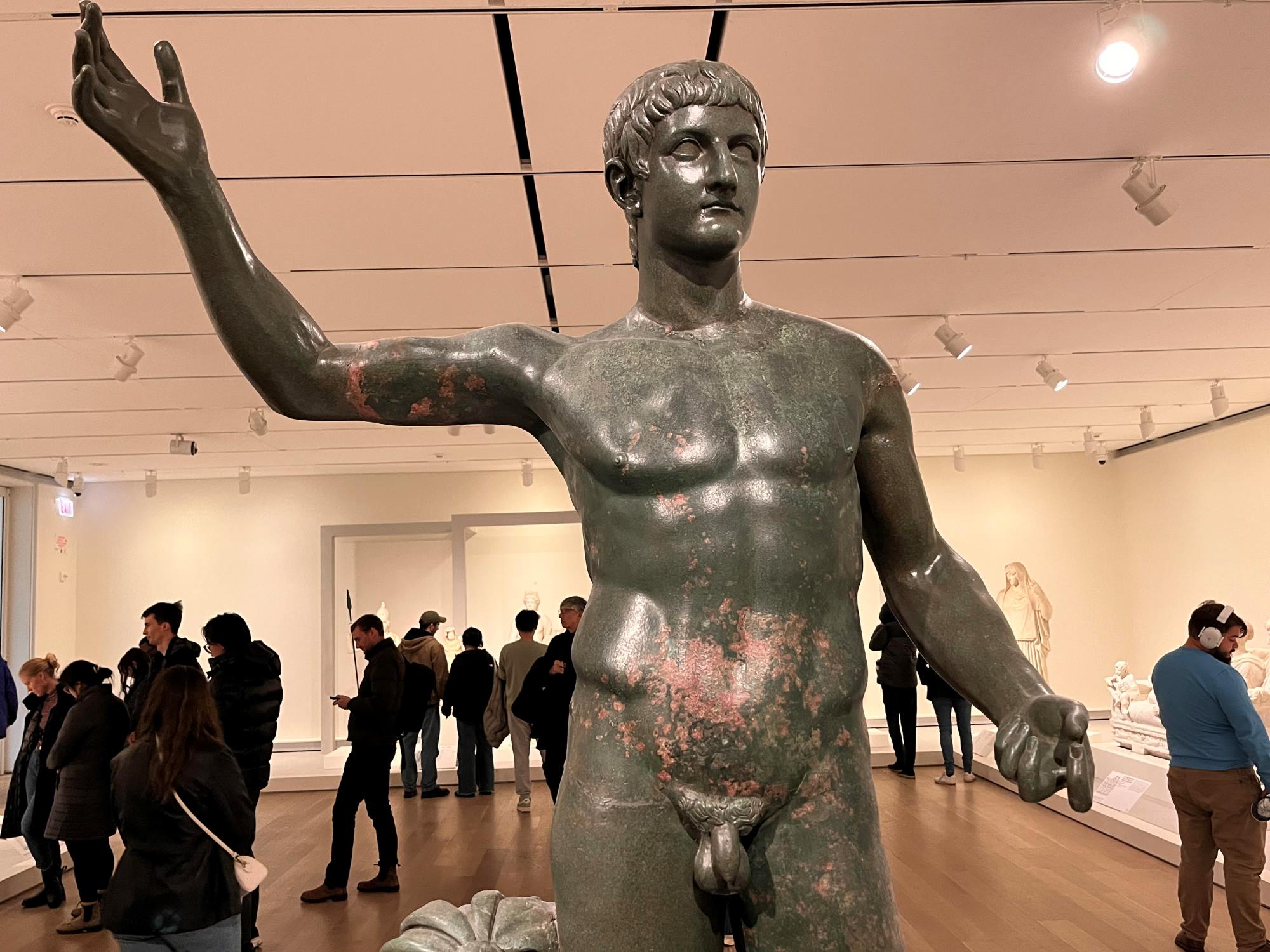
The other day at the Art Institute of Chicago, we ran into a familiar figure: a bronze of the Roman general Nero Claudius Drusus Germanicus, generally known simply as Germanicus.

The statue stands in an exhibition of ancient Roman sculptures from Italy’s Torlonia Collection in Italy.
I felt as if I knew him. I first encountered Germanicus in 1976 as a teenager, while watching the BBC Masterpiece Theatre series “I, Claudius.” He was seen as was something of a first-century JFK, charismatic and full of promise before he was tragically assassinated.

I later read the source novel by Robert Graves, a tale of intrigue, murder, and palace coups among Caesar Agustus’ family. Germanicus won victories as a general on the German frontier but was later poisoned in Syria. Many blamed Emperor Tiberias, a brooding dissolute who was jealous of Germanicus’ popularity. Most dangerously to Tiberias, the soldiers adored their general.

Continue reading
Leave a comment

Filed under Uncategorized

Of dementia, frog jumping, and angel campouts

Or, a son’s letter recalls an amphibian’s ignoble end.

My mother has been diagnosed with dementia, so I have been sending her letters to spark old family memories. This week I wrote to her about our family’s visit to the Calaveras County Fair & Jumping Frog Jubilee in the mid-1960s. More on that below.

Dementia takes many forms. The rehab facility wing where she’s staying features a rectangular hallway around a courtyard where shrubs and eucalyptus trees are planted. Some patients sit staring out the window wherever staffers park them. Others propel themselves in their wheelchairs with their stockinged feet, determined to keep circling, circling, hour after hour. Get out of their way or they’ll scowl at you and gibber a rebuke. During my recent visit, one poor fellow asked me whenever he circled by, “Where am I?”

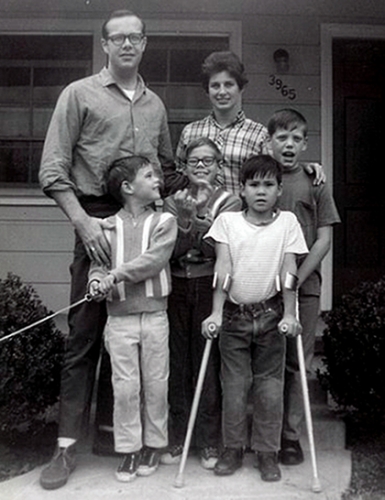
The Workings in the late ’60s, several years after the Angels Camp trip.

Mom can appear mentally sound if forgetful—conversant and aware of where she is. But she often falls into confusion. At first she thought she’d been kidnapped, rather than transferred here from a hospital after a fall. She still keeps telling us that my mentally disabled brother Jeff is lost, out wandering the Mojave Desert where we lived fifty-seven years ago.

Continue reading

Leave a comment

Filed under Uncategorized

Chemodan III: ‘Awfully happy’: George Walton finds love—and escapes the USSR with an aristocrat wife

This is the third post in a series about a mysterious suitcase that once belonged to a young Briton who followed his father into a career as a diplomat in the USSR in the 1930s. Check here for parts one and two.

Even before his posting abroad, George already had connections with the Soviet literary scene. With Reginald Merton he translated Aleksandr Neverov’s 1923 novel Tashkent: City of Bread (Victor Gollancz, London, 1930). The work prefigures the defining horror of George’s time in the Soviet Union: the famine induced by the Bolsheviks’ violent collectivization. From 1931 to 1934, millions would die in Ukraine, Russia, and Kazakhstan under the communists’ harebrained war on successful farmers, whom it dubbed “kulaks.”

In the novel, famine stalks the Volga River region around Samara. Twelve-year-old Mishka Dodonov has lost his father, grandparents, and other relatives to the hunger. To find grain for his mother and brothers, he rides the rails 1,300 miles to Soviet Uzbekistan.

From America to the starving of Russia: a 1922 poster hails food aid from the U.S.

In the Walton-Merton translation, the novel reads:

“The two younger ones were useless little people in these hard times; one spent his time begging for gruel, while the other was carving a toy windmill for the roof. The mother was weak with hunger. She used to go down to the stream for water but had barely strength enough to get back. But for all her cries and laments the famine showed her no mercy.

Continue reading

Leave a comment

Filed under Uncategorized

Chemodan II: 2 + 2 = 5: Stalin coins a slogan, and 500,000 ‘dirty swine’ applaud death sentences

This is part two in a series about a mysterious suitcase that once belonged to a young Briton who followed his father into a career as a diplomat in the USSR in the 1930s. Check out parts one and three.

A school rugby team photo with the future Captain W.R. Frecheville of the Royal Engineers, whom the Bolsheviks would capture and execute in 1920.

Even as young George Walton was at Sedbergh, studying French, passing the ball on the rugby field, and bowling on the cricket pitch, he must have avidly followed his father’s career abroad. The Civil War was raging from 1918-1920. The U.K. deployed troops from the White Sea to the Sea of Japan.

In the south, where W.S. was stationed after he left Murmansk, the Royal Air Force flew combat missions against the Red Army. British ground troops and heavy Mark V and light Whippet tanks joined in the White attacks, Lauri Kopisto writes in a dissertation titled “The British Intervention in South Russia 1918-1920” (University of Helsinki, 2011). British tank crews led a successful assault on the Bolshevik stronghold of Tsaritsyn, later renamed Stalingrad. The Bolsheviks made clear their hatred for the foreigners, threatening to castrate and crucify any British prisoner of war who fell into their hands.

[Check out the new edition of The Insurrectionist.]

Continue reading

Leave a comment

Filed under Russia

Chemodan I: A mysterious suitcase’s tale of war, revolution, and love in the time of Stalin

This is the first in a three-part series. Check here for parts two and three.

I knelt packing my bag on the floor of the London townhouse of Andrew Fox, a British businessman and friend from when we both lived in the Russian Pacific seaport of Vladivostok. I had come here to interview him for a memoir piece on the 1990s and early 2000s in Russia’s “Wild East.” This was a turbulent era when mob-linked political bosses kidnapped journalists, a shipping industry whistleblower was blown to bits by TNT planted under her bed, and the governor threatened to jail Andrew, who also happens to be the honorary British consul general to the city.

I was double-checking my passport, wallet, and other essentials (My hearing aids! Oh, in my ears) when Andrew came thumping downstairs with a leather suitcase. As scuffed as old shoes, it was peeling open and dusted with dried mold that rubbed off like chalk on one’s clothes.

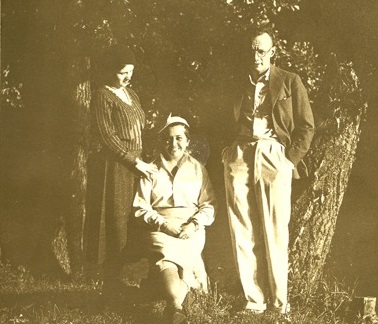
Unidentified photograph found in the suitcase, likely of George Walton, his wife Natalia (Tata), and his Russian mother.

“Before you go, did you want to take a look at this?” he said.

That’s right; he had mentioned something about a suitcase full of old British documents concerning Russia. I was heading to St Pancras to catch a train back to Belgium. Yet who could resist this strange object? “Suitcase” translates as chemodan in Russian, a word as ordinary as its English equivalent. But when applied to this curiosity, it seemed to describe a magical object that might pop up in an Isaac Bashevis Singer story.

“Sure,” I said. “We have time.”

Continue reading

Leave a comment

Filed under Uncategorized

How El Salvador shed the title of world’s murder capital

The day Melissa Rivera turned 18, a friend of hers named Karen Guerrero sent the Salvadoran student a text wishing her happy birthday.

By 1 p.m. Guerrero, who was also 18, was missing, Rivera recalls. She was later discovered dead in a ditch, her limbs cut off. Her slain brother lay beside her.

“She was not involved in any drug or gang stuff,” says Rivera, who is studying at Universidad Francisco Gavidia. “She had a scholarship and was a very kind Christian girl.”

Such horrors were commonplace a few years ago in El Salvador, a nation riven for decades by civil war, death squads, and gang warfare. Now 21, Rivera remembers her mother walking her to school when she was a child. The older woman covered her daughter’s eyes when they passed the corpses of murder victims in the road.

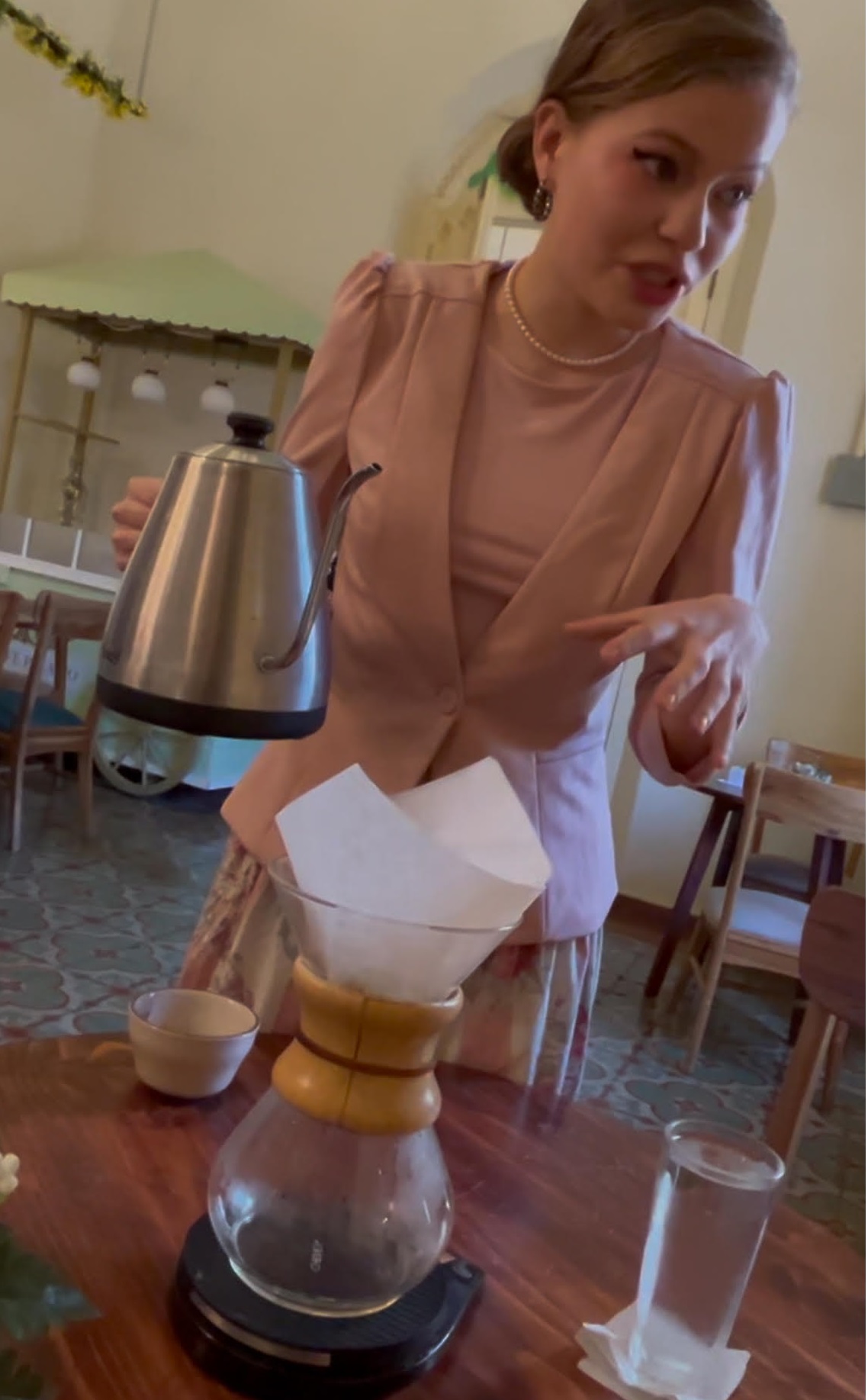
Rivera serves Salvadoran coffee at a Santa Tecla café.

“When you grow up in a society that normalizes violence so much, you get used to it,” Rivera says. “It was very common to see every day a person that was found whose head was chopped off.”

Continue reading

Leave a comment

Filed under Crime, International, Salvador

Confessing to Sister Sparkle at St. Origen’s

With the announcement that the Trump administration is banning the barbarous practice of transitioning children, I thought I would share another excerpt from my novel The Insurrectionist, out now from Freedom Letters press. Here, my journalist protagonist Ian Landquart, who has inadvertently ensnared his own daughter in an FBI probe of J6ers, attempts to repent at St. Origen’s Methodist Church in Chicago, where he meets the genderfluid Pastor Theo Wooster, AKA Sister Sparkle.

Above, X’s Grok tries valiantly to render Sister Sparkle based on my description below. Close, my digital friend, very close.

It had been years since he had prayed, not since his choirboy youth, before he rebelled against his parents’ religiosity. They’d been High Church Anglicans, all in for the smells and bells. He felt about under the pew ahead but found no kneeling rail. Should he cross himself?

He tried to remember the confession. We acknowledge and bewail our manifold sins and wickedness … provoking most justly Thy wrath and indignation.

Wrath and indignation.

“Ian, you shithead,” he murmured.

A hand with Crayola-blue nails rested gently on his shoulder, and he started. Looming over him was a busty, female-presenting individual in clown-white pancake makeup and a flamboyant outfit.

Continue reading

Leave a comment

Filed under Books, novel, The Insurrectionist

Pardon the J6ers

For four years we have heard of the horrors—unique in American history, we’re told—of the January 6, 2021, “insurrection” and “attack on the Capitol.”

On the first anniversary, Veep Kamala Harris shuddered to recall “dates [that] echo throughout history … that occupy not only a place on our calendars, but a place in our collective memory: December 7, 1941, September 11, 2001, and January 6, 2021.”

During an address to a joint session of Congress, President Joe Biden cast his troubled gaze 160 years back in history, calling J6 “the worst attack on our democracy since the Civil War.”

Continue reading

Leave a comment

Filed under Uncategorized

Writing lessons from dishwashing, 40 years on

Here’s why Moses wandered the Sinai Desert for four decades: When you reach your sixties, four decades is the blink of an eye.

“Come on, old man, when are we getting to the Promised Land?” the Israelites surely told the grizzled prophet. “It’s been forty years already.”

“You’re kidding. Seems like only yesterday we left Egypt.”

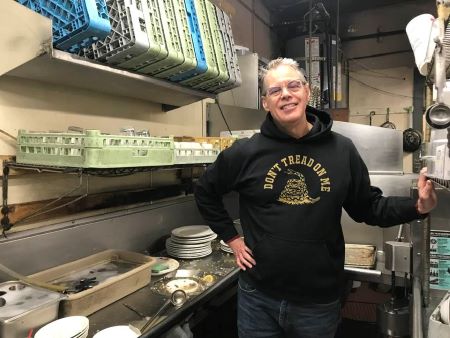
Such were my thoughts during a recent trip to Seattle when Nonna and I dropped by Julia’s in Wallingford. In the fall of 1984, I was an impoverished writer working as a dishwasher at the popular restaurant. Time flies, but that wasn’t the only conclusion I drew four decades on. Rather, the trip reminded me that in hard times you aren’t always aware of the greater plot of your life.

Continue reading

Leave a comment

Filed under Books, Fiction, Writing

A step in the right direction, but…

Washington Post owner Jeff Bezos fired off an op-ed on Monday explaining his decision to stop endorsing presidential candidates. The move is the right one, even if many of the newspaper’s staff are in open rebellion.

“Most people believe the media is biased,” he writes. “Anyone who doesn’t see this is paying scant attention to reality, and those who fight reality lose. Reality is an undefeated champion.”

Reports say the Amazon founder also intends to employ more conservatives, a welcome move, given that the legacy media’s idea of a conservative tends to be never-Trumpers like the Post’s Jennifer Rubin. She has flipped on some of her most heartfelt issues rather than share a position with the ex-president.

Continue reading

Leave a comment

Filed under Uncategorized