
The day Melissa Rivera turned 18, a friend of hers named Karen Guerrero sent the Salvadoran student a text wishing her happy birthday.
By 1 p.m. Guerrero, who was also 18, was missing, Rivera recalls. She was later discovered dead in a ditch, her limbs cut off. Her slain brother lay beside her.
“She was not involved in any drug or gang stuff,” says Rivera, who is studying at Universidad Francisco Gavidia. “She had a scholarship and was a very kind Christian girl.”
Such horrors were commonplace a few years ago in El Salvador, a nation riven for decades by civil war, death squads, and gang warfare. Now 21, Rivera remembers her mother walking her to school when she was a child. The older woman covered her daughter’s eyes when they passed the corpses of murder victims in the road.
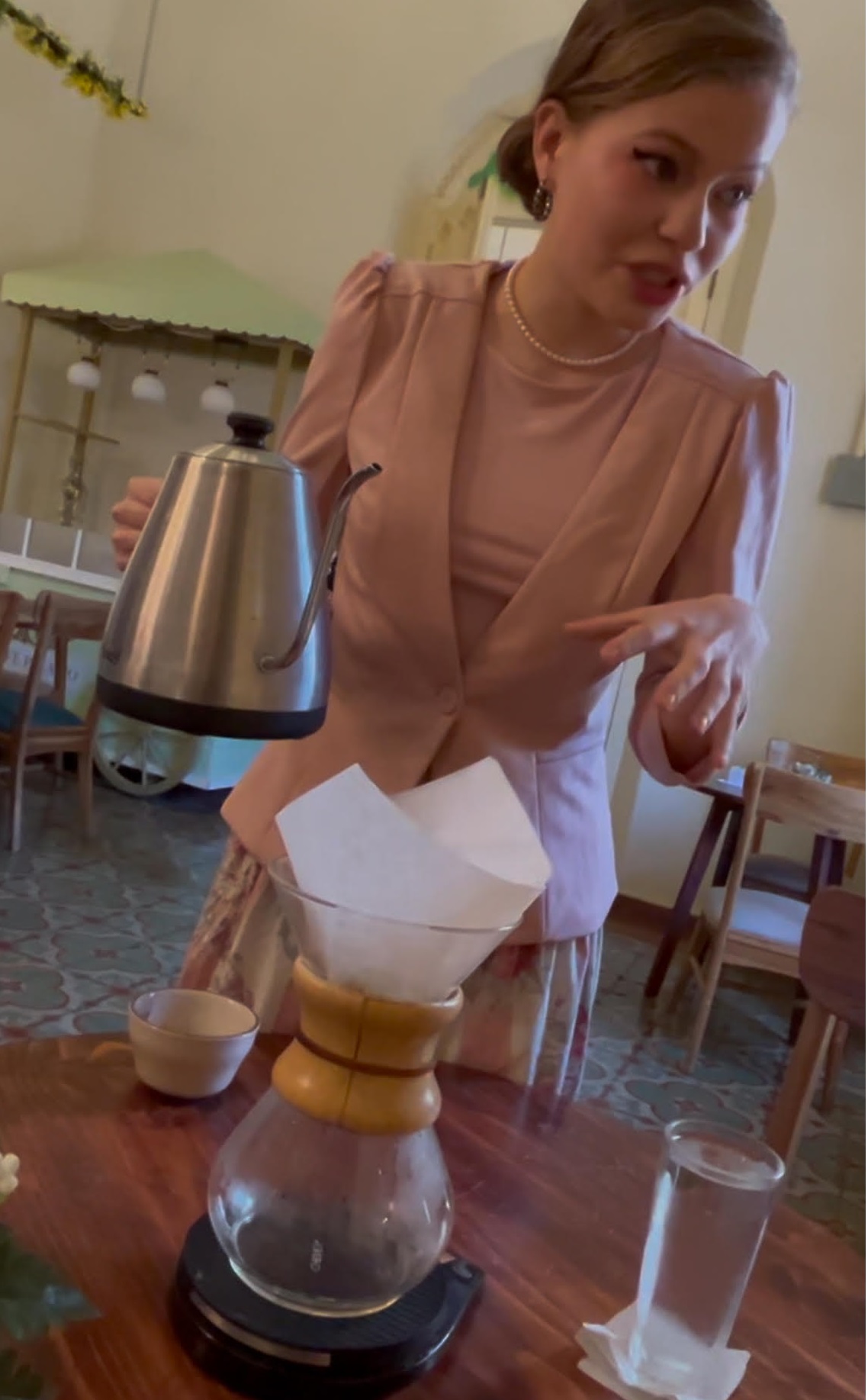
Rivera serves Salvadoran coffee at a Santa Tecla café.
“When you grow up in a society that normalizes violence so much, you get used to it,” Rivera says. “It was very common to see every day a person that was found whose head was chopped off.”
Crushing the gangs
Thankfully, that’s changed. Today El Salvador is one of the safest countries in the world due to President Nayib Bukele’s crackdown on gang violence. This newfound peace—emerging so quickly out of a bloody past—is part of what drew Nonna and me to a nation that also features volcanic landscapes, Mayan ruins, and surfable beaches.
In 2015, this Central American nation of 6 million people was known as the murder capital of the world, with a homicide rate of 104 per 100,000 residents—20 times that of the United States. Last year, El Salvador set a record for safety, reporting 1.9 homicides per 100,000. By comparison, Chicago, next door to where we live, recorded 573 slayings in 2024, or a rate of 21 per 100,000.
El Salvador’s changed circumstances are catching the world’s attention. During a recent visit by U.S. Secretary of State Marco Rubio, Bukele offered the U.S. space in Salvador’s new prison as a deportation destination for illegal aliens.
We met Rivera during a recent stay in Santa Tecla, a suburb of the capital city of San Salvador. She was then working in the charming Cafe Palacio, a cultural space within the 112-year-old Palacio Municipal Tecleño, a restored mansion built around a central courtyard in the classical Latin style. The café offers delicious desserts and “the best high-altitude coffee in El Salvador.”
Santa Tecla appears to be thriving. A charming weekend street market stretches for blocks past the old cathedral. At night it is alive with street musicians, craft booths, taco trucks, and a mummer dressed as a candelabra. On a recent Friday residents gathered for a free concert that featured singers, traditional dancers, a pianist and a violinist.
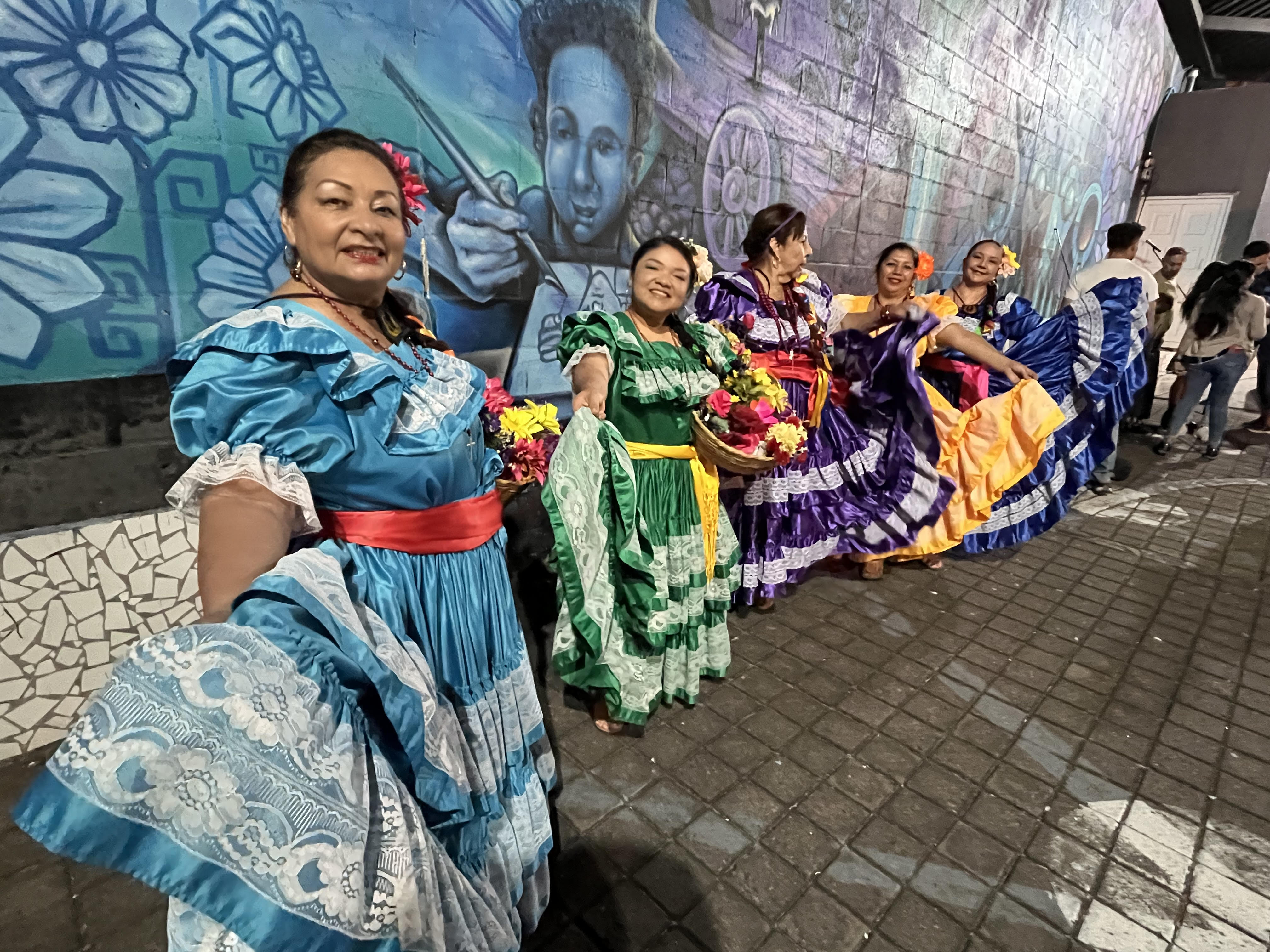
Dancers prepare to perform on a Friday evening in Santa Tecla.
Warring factions
This festival atmosphere would once have been unthinkable. In 2015, the MS-13 and Barrio 18 gangs carved the city into warring factions, ABC News reports. Every night the morgue sent out a forensic team to collect the corpses of murder victims from the street. In such a setting, violence becomes normalized. When explosive sounds erupted near Rivera’s school, children would joke, “Are you hearing fireworks or are you hearing bullets?”
El Salvador introduced a state of emergency in 2022 after street gangs killed 62 people within a few hours, the Los Angeles Times reports. The congress granted Bukele’s administration legislative powers that included suspending some constitutional rights and giving police more authority to arrest and hold suspects.
Virtually everyone we talked to—cabdriver, bellhops, taqueria owners—said existence has gotten better with Bukele’s crackdown on the gangs. Life is livable again, they say.

A soldier patrols a street in San Salvador.
That said, the crackdown is not without its critics. They say peace in the streets has come at a cost to civil liberties. Human rights groups have dubbed Salvador’s mega prison—the Terrorism Confinement Center—a “black hole of human rights.” Critics also accuse the government of sweeping up innocent people.
Amnesty International reports that two years after the imposition of emergency measures, “the government of El Salvador continues to ignore its international human rights obligations by maintaining these measures as the mainstay of its security strategy.”
“Reducing gang violence by replacing it with state violence cannot be a success,” a spokeswoman adds.
Clearly, a nation caught up in a bloody street war decided to make tradeoffs to achieve safety in citizens’ daily lives. Yet public support appears to be strong when a crackdown means your children won’t be passing dead bodies on the way to school in the morning.
“For many Salvadorans,” the Daily Mail notes, “the high-security prison isn’t a disgrace—it’s a symbol of safety and hope, driving the president’s soaring popularity and political dominance.”
 The Elephant Box