
Or, why I support Israel and the Jewish people
The other day my Twitter friend @OliaonX expressed her gratitude for gentiles who support Israel and the Jewish people. She wrote:
In spite of all the brainwashing and propaganda being pushed by MSM and UN, in spite of all the anti-Israel protests all over the world, in spite of many country’s governments declaring their support for “Palestine”, and in spite of supporting Israel being unpopular, you all chose to stand on the right side of history – the side of light – I’m so grateful!!!
She asked for comments on why we are doing this. My reply has grown too long for X, so I am posting it here.
Dear Olia:
I have been thinking about this subject since you posed a similar question on X several months ago.
Luckily, brainwashing doesn’t work for those understand the Jewish people’s 4,000 year history in the land “between the river and the sea.” Only the ignorant regard Jews as interlopers. It is instructive to watch social media videos in which those pro-Hamas Ivy League geniuses can’t even identify which river and sea they are talking about, let along grasp the slogan’s genocidal meaning.
There was a time when an understanding of Israel’s ancient history was universal in the West, despite the antisemitism in our own culture. A century ago, even atheists knew where the Jordan River was and what it meant in Western symbology. Every Black sharecropper understood the meaning of the lyrics:
When Israel was in Egypt’s land
Let my people go
Oppressed so hard they could not stand
Let my people go.
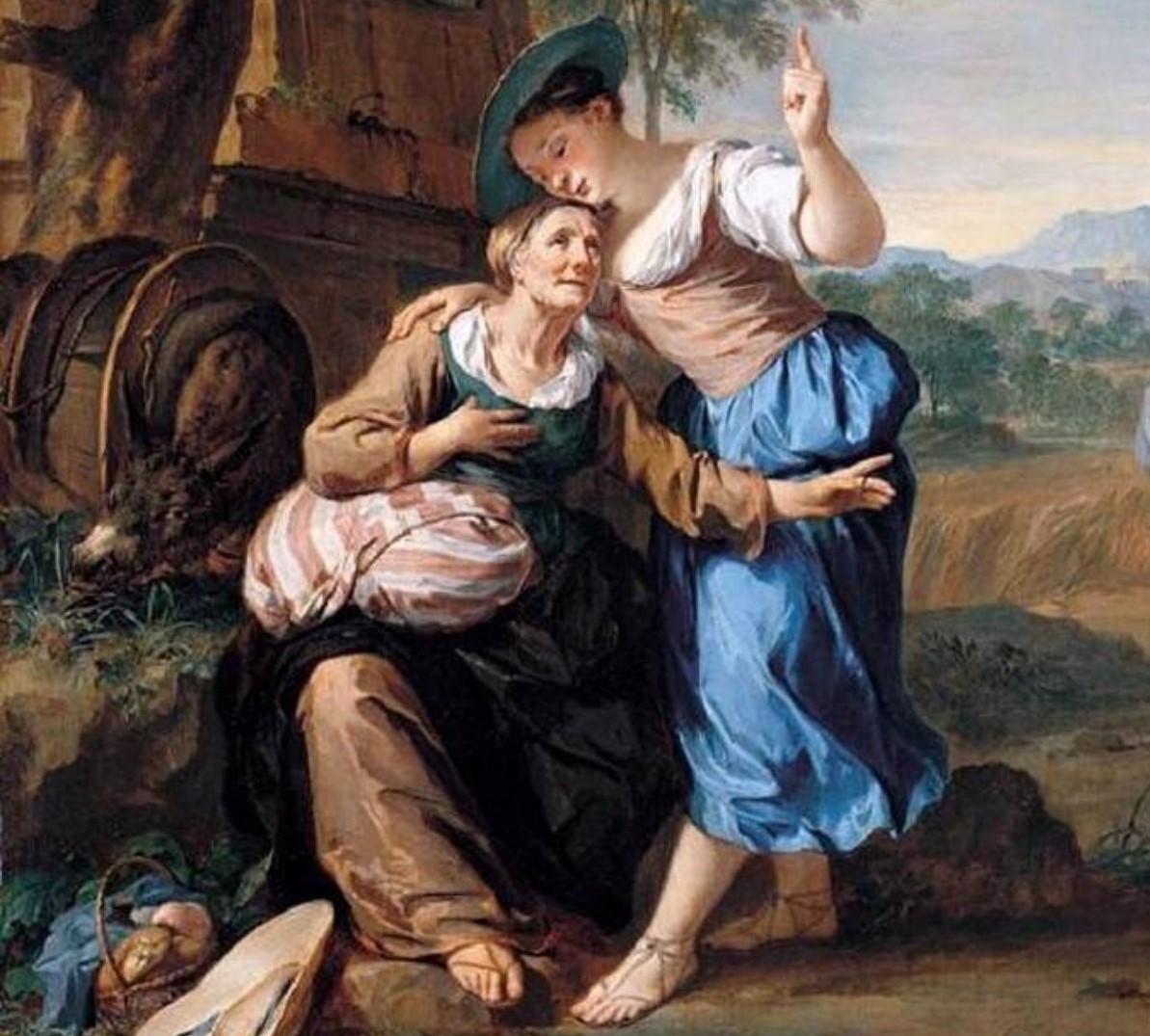
For Christians, your history as Jews is our history, your heroes ours. Abraham, Samson and Delilah, David and Goliath, Daniel in the Lion’s den, Esther outsmarting the genocidal Haman, the beautiful tale of love and faithfulness in the book of Ruth—these were the stories of my youth. We learned them both from the Bible itself and the comic book versions (graphic novels, in today’s parlance) given to us in installments every week in Sunday school. We believed the Jews were the Chosen People.
“Your people shall be my people, and your God my God”—so it always was with the Working household.
As I was growing up, our family prayed together every evening, often reading from both the Old and New Testaments. For a time my dad pastored a small church in the Mojave Desert. Every morning before we caught the bus to school, my mom sat us down to read, day by day, through 1 and 2 Samuel and 1 and 2 Kings. Then we stepped out into the heat of our mountainous part of the desert. I imagined I was with David and his band of insurgents on the run in our landscape of tumbleweeds and Joshua trees.
Rabbi Jesus and his disciples were Jews. The gospel of Matthew traces the Messiah’s genealogy through Abraham, Isaac, David, Solomon, and Zadok. Early Christians identified Christ by Jewish honorifics: Messiah, Son of David, Lion of the Tribe of Judah. The gospel writers noted that he was crucified under a sign that read, “King of the Jews.” (The Jewish leaders didn’t like that taunt.) Peter, the first head of the church—or first pope for Roman Catholics—was a Galilean fisherman. One of the major disputes of the early church was over whether Greek converts should be required to eat kosher and follow Jewish law. But Peter had a vision in which a voice from heaven commanded him to eat all kinds of “unclean animals” (Acts 10), and happily, in my view, bacon won the day.
The Holy Land has been part of my mental geography since I was a boy. Both my parents were pastors, and they repeatedly led tours to Israel. Once, when I was nine years old, I found a historical atlas of the Bible at a swap meet in our desert town of Pearblossom, California. I spent my birthday money on the book. I used to pore over the pages, even as we followed current events concerning Israel. In 1967, the Jewish state fought off multiple armies and won the Six Day War. Later, in 1973, were horrified when Israel was caught off-guard in the Yom Kippur War, and relieved when the country held off its attackers. The peace deal with Sadat that followed was cause for celebration. Three years later, we cheered Israel’s brave rescue of the kidnapped Jews held by hijackers in Uganda.
When I responded to your question earlier, I faced two kinds of objections on X—both of them irrelevant to my point. Someone sneered, “The Jews hate you, cuck.” Others, apparently Jews, noted the history of Christian antisemitism, which some trace to the gospels.
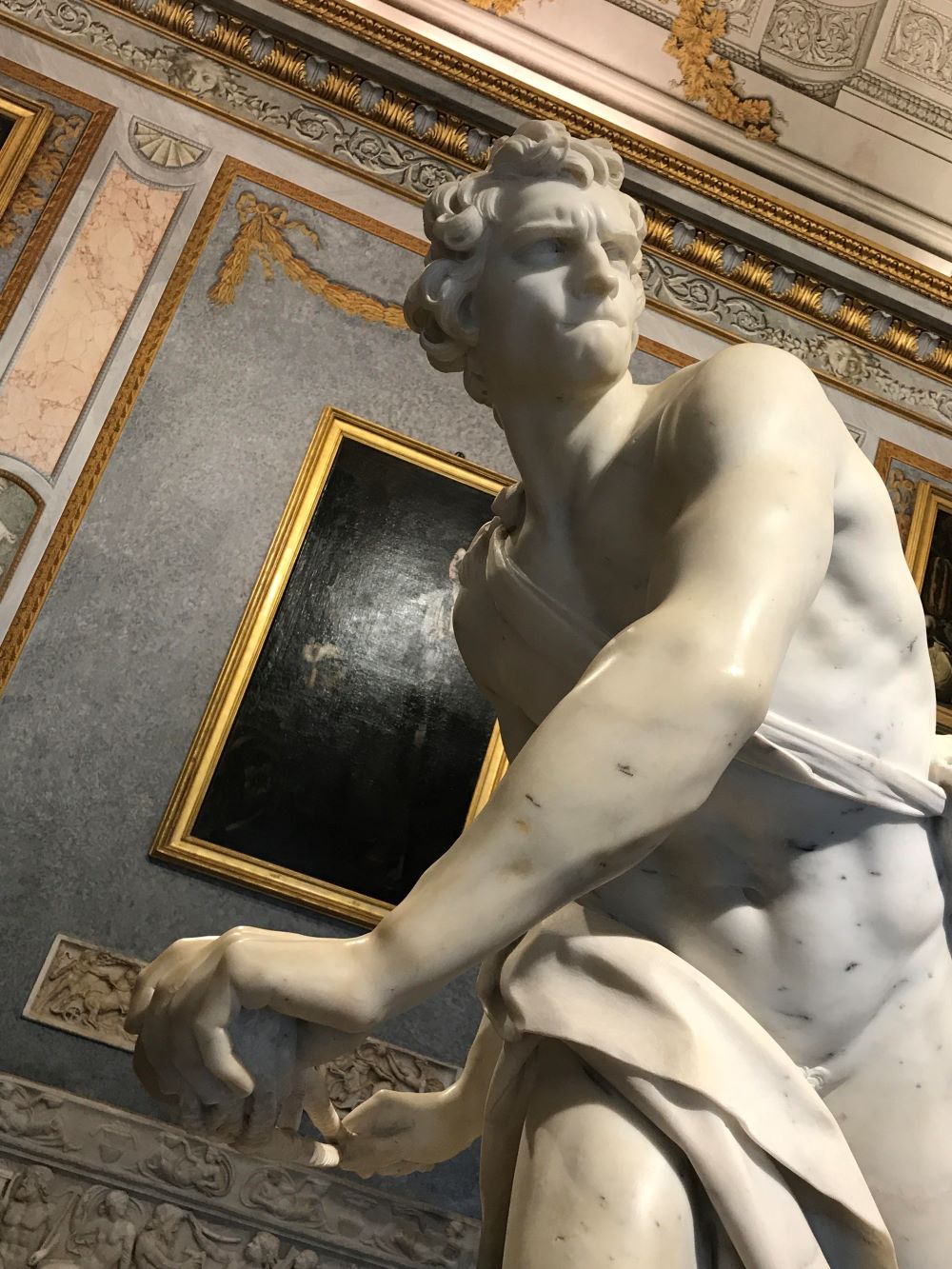
Here’s why all this is irrelevant, even one supposes the comments to be true. The Bible, both Old and New Testaments, is the foundational document of Western Culture. What else rivals it? The Epic of Gilgamesh? Homer’s Iliad? Virgil’s Aeneid? Even if Jews do hate Christians (doubtful), or if Christians have long persecuted Jews, it doesn’t erase this shared cultural history. Bernini, Rafael, Dante, Milton, Bach, Handel, and a thousand other Christian artists, writers, and composers drew inspiration from Judaism. Only the ignorant could look at Michelangelo’s Moses, the ceiling of the Sistine Chapel, or Rembrandt’s “Sacrifice of Isaac” and fail to understand the Jewish roots of Christendom.
My German, English, and Scotch-Irish ancestors sat on rough-hewn pews in log-cabin churches in the Pennsylvania wilderness, and traced the lines of ancient Jewish scripture with blackened fingernails as they read their Bibles.
It would be beyond the scope of a blog post to defend the modern state of Israel. I will just note that Jews have resided in the land between the Jordan and the Mediterranean (yes, that river and that sea) since the time of Abraham. (And yet Israeli Arabs are citizens with full voting rights; they are even represented in the Knesset.) Medieval and early modern Christian pilgrims to the Holy Land, though hostile to Judaism, often mentioned the Jews still living there. So did Mark Twain in 1869. For an unrelated historical novel I finished several years ago, I used the 1919 Encyclopedia Americana extensively as a source. Decades before Israel was founded, the encyclopedia listed Jerusalem’s 1911 population “as about 68,000, made up of 8,000 Mohammedans, 10,000 Christians and 50,000 Jews” (vol. XVI, p. 30).
The pro-Hamas legion on U.S. campuses demonstrate their ignorance when they suggest that Israel was occupying Gaza before Oct. 7. The Jewish state forcibly removed its own settlers from Gaza and evacuated the strip in 2005. Over the ensuing years, Gaza could have invested its billions in international aid and become another Dubai, a Singapore. Instead, Palestinians indulged their orgiastic hatred of the Jews.
As for the present destruction of Gaza, any nation would respond with ferocity after a grotesque, murderous invasion of savages targeting its civilians. If the Hamas really wants the bombing to stop, it could end the war twenty minutes after I hit the send button on this post. All they must do is release the hostages they kidnapped, maimed, and raped—and hand over the Israeli corpses they have, like vampires, stashed away in their caves. This should be the first demand of the antiwar mobs, rather than harassing Jews who don’t even live in Israel. I seem to recall there’s a word for this. Anti-something. It will come to mind.
At such a perilous time, I hope it is not unwelcome of me to offer suggestion to America’s beleaguered Jews. It would be worth reconsidering one’s attitudes toward evangelicals—the Christian population that is friendliest toward the state of Israel. On Facebook, a fellow classmate from my creative writing MFA program alternates between posting support for Israel and damning evangelicals. (The household of my childhood was evangelical.) I wish this classmate would reflect on the words of the late columnist Charles Krauthammer, who was Jewish.
“I’ve been speaking to Jews now for thirty years, and it’s the same stuff, you can imagine,” Krauthammer said. “I mean, I really give them shit. I say, ‘I don’t understand this.’ I particularly do [this] over their truly disgraceful, demeaning, disregarding, and disrespect for evangelicals, but that’s sort of the end of my speech after half the audience has left, that’s where I kind of unload on the rest. After thirty years I’ve realized that I’m totally wasting my time. I haven’t made a dent on any of them.”
Grasp the hand of friendship that’s offered. Just my two bits.
Last fall, as antisemitic outrages began cropping up everywhere around the world, I wrote to several Jewish friends to express our support. One of them was my former literary agent, Jonathan Bronitsky.
“I’m not sure whether you caught the ‘Would You Hide Me?’ campaign,” he replied. “A friend demolished it, saying something like, ‘This time, we will not hide. My question then is, Will you fight alongside me?’ Brilliant. The survival of the Jewish people is inextricably tied to the survival of America and Western civilization.”

He’s right. And the answer is yes, if pogroms broke out, I would fight alongside American Jews, and I am armed. I suspect many evangelicals would do so as well.
Responding to my earlier tweet in support of Israel, one angry Scotsman insisted that Jesus would be standing with the Gazans in this war. Me, it’s hard to imagine Jesus washing the feet of the monsters hauling home the corpses of women murdered during the act of rape, or blessing the fanatical throngs who poured into the streets to spit on their human trophies. I doubt Christ would raise his pierced hand to bless terrorists firing rockets from behind hospitals and their own children’s schools (using civilians as human shields is a war crime, by the way). If he did find himself in Gaza today, perhaps he would mention Isaiah 61:1-2, which he quoted in when he spoke in a synagogue in Nazareth (Luke 4:14-30):
[The Lord] he has sent me to bind up the brokenhearted,
to proclaim liberty to the captives,
and the opening of the prison to those who are bound;
to proclaim the year of the Lord’s favor,
and the day of vengeance of our God;
to comfort all who mourn.
Or as that old spiritual puts it, “Let my people go.” Peace in Gaza would follow. Can the Gazans allow that to happen, or is their hatred too intoxicating to let go of? Nine months on, I think we know the answer.
Take care,
Russell
§
Illustrations above:
Nicolaas Verkolje, Ruth and Naomi, 1744.
Gian Lorenzo Bernini, David, 1623-1624.
Liberty University students show their support for Israel, November 2023.
 The Elephant Box